A casket ad appeared next to their photo. You did not sign up for that.
You picked a memorial platform because someone at the funeral home mentioned it. Within a week, the tribute page had banner ads for cremation urns, a pop-up asking visitors to buy virtual candles, and a cookie tracker quietly profiling everyone who came to pay their respects.
That is what "free" costs when you are building a memorial.
And the platform is only the beginning. Who legally controls your loved one's email and social media accounts? Can you upload their professional portrait without violating copyright? How do you invite a scattered family to contribute memories without exposing the page to trolls and scammers? What happens to everything you built if the hosting company folds?
Most families figure this out one crisis at a time — losing photos, triggering account lockouts, or discovering months later that their memorial fund disqualified a survivor from Medicaid.
The Digital Legacy Navigation System
This is not a list of platform recommendations. It is a complete navigation system for building a memorial that protects the estate, respects the family, and survives for decades.
The toolkit combines legal authority frameworks, platform decision tools, security protocols, and fill-in worksheets into a single resource that takes you from "where do I even start" to a finished, secure memorial page — without needing any technical skills.
What's inside the full toolkit
- Seven-platform comparison matrix — every major memorial platform scored on ad policy, data portability, long-term hosting guarantees, and privacy controls, so you pick the right one the first time instead of migrating later
- RUFADAA legal authority guide — the three-tier digital access hierarchy that determines who controls the deceased's online accounts, what fiduciaries can and cannot view, and how to establish legal authority without triggering platform lockouts under the Computer Fraud and Abuse Act
- First-week identity security protocol — a day-by-day sequence for locking credit at all three bureaus, notifying Social Security, securing devices, and writing a secure obituary that does not hand identity thieves the data they need
- Copyright and upload rulebook — which photos, videos, and music you can legally post to a memorial page, the work-for-hire exception that changes everything, and how to stay clear of automated takedown systems that scan public memorial pages for infringement
- Crowdfunding protection structures — four account and trust setups that keep memorial fund proceeds from disqualifying survivors from Medicaid, SSI, or SNAP benefits
- Family coordination worksheets — fill-in templates for collecting stories and photos from relatives, resolving disagreements about what stays public and what stays private, and assigning long-term memorial maintenance roles
- Copy-and-paste communication scripts — ready-to-send messages for requesting photos from distant family, notifying employers, responding to creditors, moderating guestbook posts, and reporting obituary pirates
- QR memorial medallion guide — how to connect a physical headstone, bench, or urn to the digital memorial, including material specifications, cemetery approval steps, and weather-resistant mounting options
- Cultural and religious considerations — specific guidance for traditions that affect memorial timing, imagery choices, and public visibility
- FTC consumer protection reference — what the Funeral Rule requires providers to disclose, how to request and enforce itemized pricing, and how to file complaints when providers refuse to comply
Who this toolkit is built for
- Executors and administrators managing a digital estate alongside physical assets who need to know exactly what they are legally authorized to access
- Surviving spouses and adult children who want a memorial that lasts decades without monthly subscription fees or commercial ads next to the tribute
- Families coordinating across distance who need a structured way to collect contributions, resolve disagreements, and maintain the page long-term
- Anyone navigating this during acute grief who cannot afford to spend forty hours sorting good advice from dangerous advice scattered across the internet
Why free tools leave families exposed
Free memorial platforms generate revenue from ads, visitor tracking, and upsells. Their business model depends on traffic to your loved one's page — which means they optimize for search visibility, not for your family's privacy.
Free advice scattered across funeral home blogs and legal sites is worse. It skips the hard parts: no one mentions that uploading a professional portrait can trigger a copyright claim with statutory damages up to $30,000 per image. No one explains that logging into the deceased's accounts with saved passwords can violate the Computer Fraud and Abuse Act. No one warns that memorial crowdfunding proceeds can disqualify a surviving spouse from Medicaid if the funds are not structured correctly.
This toolkit covers all of it — in sequence, with worksheets, so nothing falls through the cracks during the weeks when your capacity for complex decisions is at its lowest.
Full refund, no time limit
If the toolkit does not help you, email hello@bereavementstartguide.com for a full refund. No time limit, no questions.
Start building the memorial they deserve
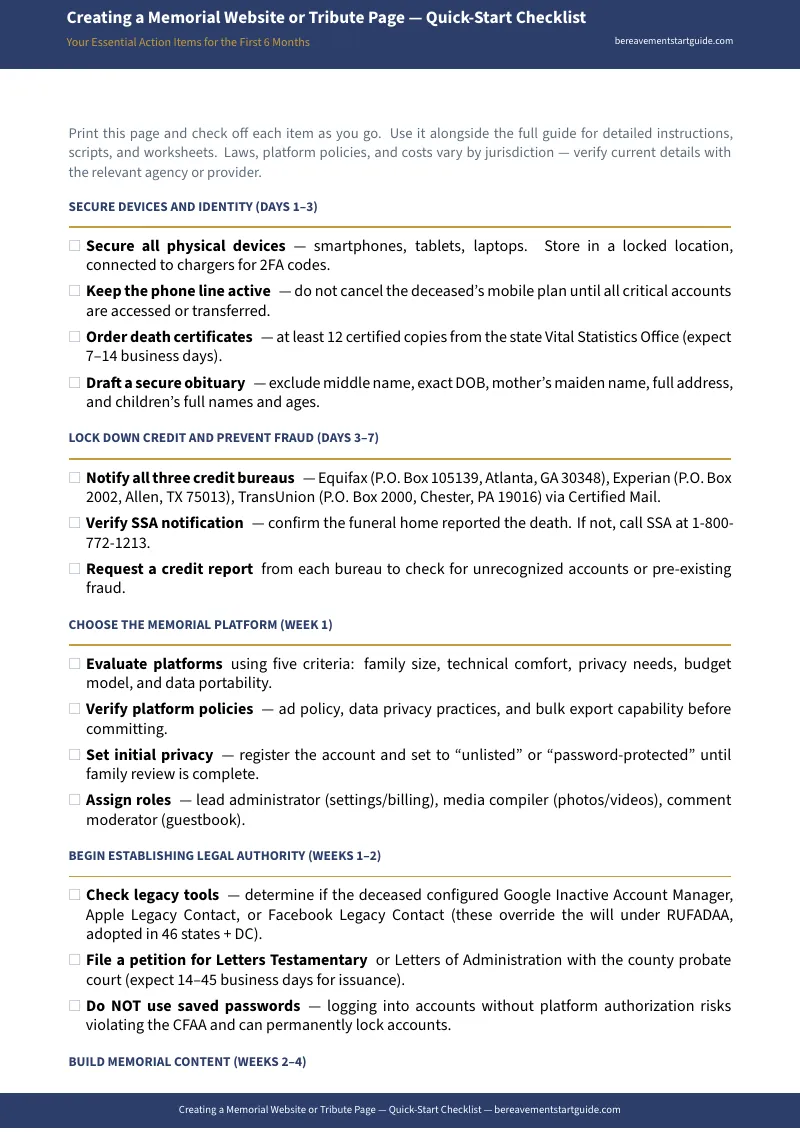
Download the free quick-start checklist to see the twenty-one essential steps at a glance. When you are ready for the complete navigation system — platform comparisons, legal frameworks, security protocols, worksheets, and scripts — get the full toolkit for and work through it at your own pace.