The estate won't wait for your family to stop fighting
Probate deadlines are ticking. The court needs an inventory within 60 to 90 days. Creditors are sending letters. Your parent's bank accounts are frozen. And your siblings can't agree on whether to sell the house, who deserves more, or whether the executor is doing their job — or sabotaging it.
Meanwhile, you're grieving. You're exhausted. And every group text or family email makes things worse.
This is where most families break. Research shows that 30% of families stop speaking permanently after a contested estate settlement, and another 30% remain deeply divided. Sibling disputes account for 44% of all estate-related legal conflicts — and they rarely start over money. They start because there's no structure, no shared process, and no neutral language for conversations that feel deeply personal.
The Structured Settlement System
The Sibling Conflict Resolution During Estate Settlement toolkit replaces arguments with procedures. Instead of hoping everyone stays reasonable, you give every sibling the same framework — the same timeline, the same decision trees, the same scripts — so the process itself does the work that a mediator or attorney would charge thousands for.
This isn't a general estate planning guide. It's a conflict-resolution system built for the specific pressure points where siblings break down: the family home impasse, the caregiver who wants compensation, the executor under suspicion, the sentimental items nobody can divide fairly, and the in-laws making everything worse from the sidelines.
What's Inside
- Communication Script Book — word-for-word email and text templates for hostile siblings, suspicious beneficiaries, and pushy in-laws. Professional, neutral language that de-escalates tension while creating a clear written record for court if things go sideways.
- Conflict Mapping Worksheet — a structured exercise that separates emotional triggers from actual legal disagreements, so you stop relitigating childhood rivalries and start resolving probate questions.
- Family Home Decision Tree — a step-by-step framework for the single most common estate impasse: one sibling wants to keep the house, the others want to sell. Covers buyout mechanics, fair-market appraisals, formal occupancy agreements, and partition actions.
- Heirloom Draft Protocol — the same snake-draft system used by professional estate mediators to divide sentimental personal property. Each sibling privately ranks items, draws a number for draft order, and selects one item per round. No shouting matches. No first-mover advantage.
- Caregiver Compensation Calculator — a structured worksheet for the sibling who spent years caring for a parent and wants recognition in the estate. Documents quantum meruit claims, personal care agreement terms, and Medicaid lookback safe harbors — the difference between a legitimate claim and one that gets dismissed.
- Executor Transparency Toolkit — fiduciary duty checklists, accounting templates, and communication protocols that protect the executor from removal petitions and protect beneficiaries from being kept in the dark.
- Milestone and Deadline Tracker — every critical probate deadline on one page: inventory filing, creditor notice windows, tax return due dates, distribution timelines. Missing one of these can cost the estate thousands or expose the executor to personal liability.
- Blended Family Playbook — specific guidance for estates involving step-parents, stepchildren, and half-siblings, where verbal promises, second marriages, and competing inheritance expectations make standard division frameworks useless.
Who This Toolkit Is For
- Executors named in the will who need to administer the estate while managing hostile, suspicious, or grieving siblings — without getting sued or removed from their role.
- Beneficiaries worried about transparency — siblings who suspect the executor is mismanaging assets and need to know their legal rights and how to request proper accounting.
- Caregivers seeking fair compensation — the sibling who spent years providing unpaid care and needs a structured approach to documenting their contribution before the estate is divided.
- Families heading toward mediation or litigation — the toolkit's frameworks often resolve disputes before they reach a mediator's office, saving the estate significant professional fees.
Why Free Resources Won't Get You Through This
Free articles and court FAQ pages explain what probate is. They don't tell you what to say when your brother accuses you of hoarding assets at 11 PM on a Wednesday, or how to handle the sister who insists Dad verbally promised her the house, or what to do when your sibling's spouse hires a lawyer and starts threatening the estate.
Estate planning blogs are designed to get you to book a consultation at $400 or more per hour. This toolkit is designed to handle the 80% of sibling disputes that don't require a lawyer — and to make sure you only spend on professional help for the 20% that genuinely needs it.
The difference between a family that survives estate settlement and one that doesn't is almost never about the money. It's about whether someone brought structure to the chaos before resentment calcified into estrangement.
Full Refund, No Time Limit
If the toolkit doesn't help you, email hello@bereavementstartguide.com for a full refund. No time limit, no questions asked. You're dealing with enough right now.
Get the Sibling Conflict Resolution Toolkit — bring structure, legal clarity, and peace of mind to your parent's estate settlement.
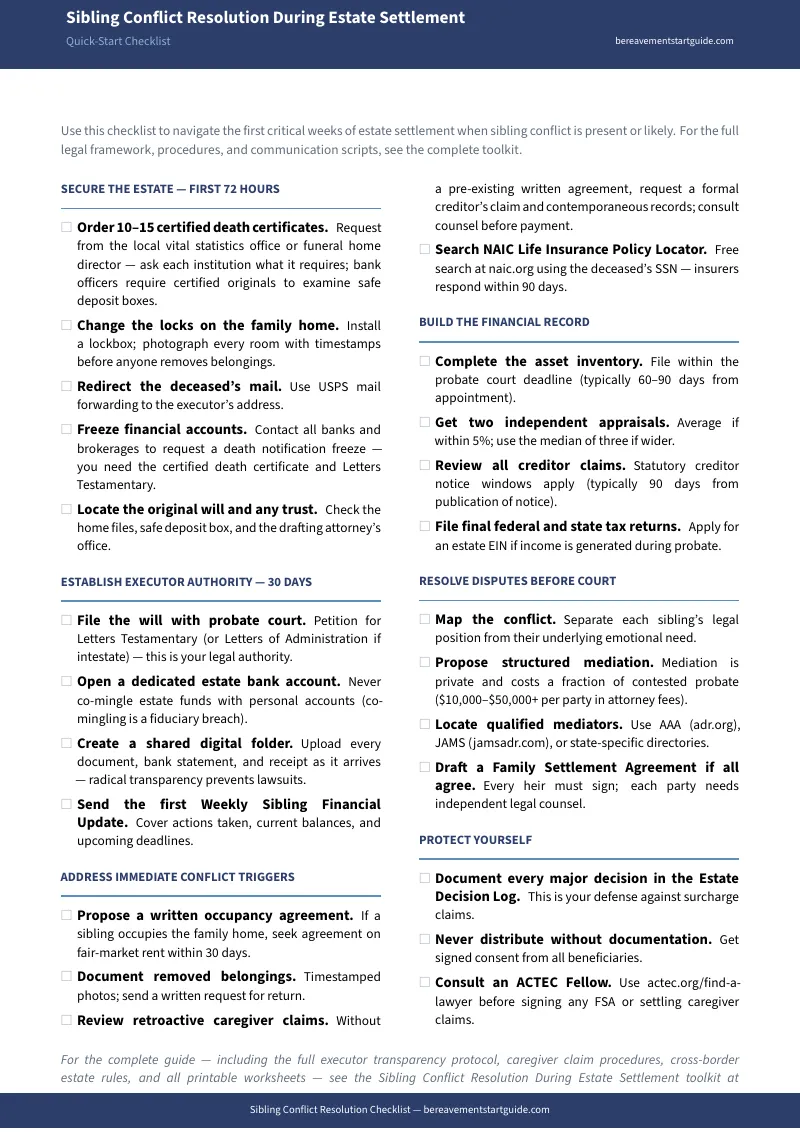
Or start with the free checklist to see whether the approach fits your family's situation.