The DMV does not pause for grief. Neither do auto lenders.
Registration deadlines keep ticking. The lender's automated collection system keeps sending payment notices. The insurance policy's permissive use coverage expired the moment the policyholder died — which means anyone still driving that car is doing so without valid coverage. And somewhere in between, a sibling is texting about who was "promised" the vehicle.
You did not sign up for any of this. You are grieving, sleep-deprived, and expected to navigate a system that buries the actual process behind bureaucratic jargon, state-specific forms, and punitive late fees.
The Executor's Vehicle Transfer System
This is not a list of DMV links. It is a complete transfer system — a structured path from "the car is sitting in the driveway and I don't know what to do" through final title filing, auto loan resolution, and insurance transition. Every chapter maps the exact sequence of calls, forms, and decisions you need to make, organized so you can act on the urgent items today and work through the rest at your own pace.
The system works because it separates the three problems families actually face — title transfer mechanics, financial obligations, and family dynamics — and gives you a dedicated workflow for each one instead of forcing you to untangle them yourself.
What's Inside
- Title Transfer Pathways — a decision tree showing whether your situation calls for a small estate affidavit, probate transfer, transfer-on-death designation, or surviving-spouse retitling, with the specific DMV form, waiting period, and estate value threshold for each state.
- Auto Loan Resolution Playbook — the four options when a vehicle has an outstanding loan (payoff, refinance, assumption, voluntary surrender), with a decision framework that accounts for the estate's solvency, community property rules, and co-signer liability. Includes the exact script to use when calling the lender's bereavement department.
- Insurance Gap Closer — a day-one audit worksheet that identifies exactly who is covered under the existing policy after the policyholder dies, what driving purposes are allowed, and whether a new policy is needed. Most families discover this gap only after an accident — the worksheet catches it before anyone gets behind the wheel.
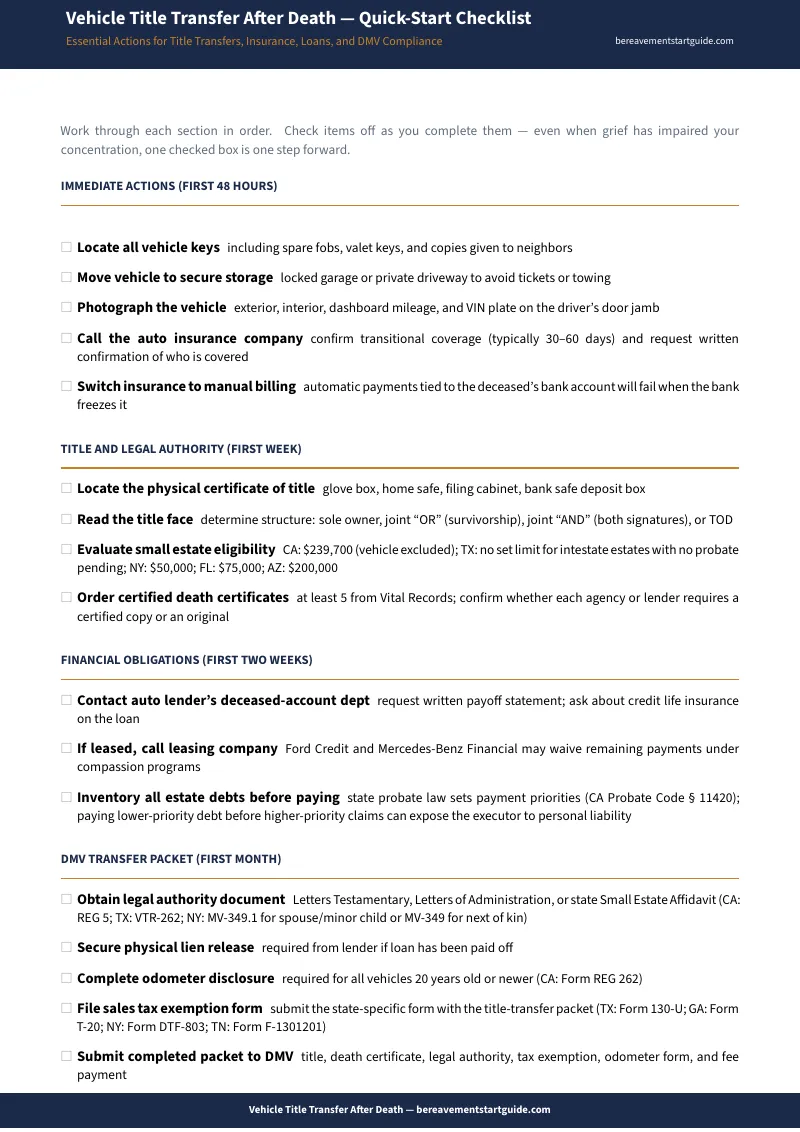
- DMV Submission Checklist — a pre-visit audit tool listing every document the DMV, lender, and insurer will ask for (death certificate copies, letters testamentary, lien releases, VIN, odometer reading), with checkboxes to track what you have and what you still need. Nothing gets rejected at the counter because a form was missing.
- Vehicle Valuation Kit — three methods to determine the vehicle's fair market value for estate accounting and equitable distribution: NADA guides, independent appraisal, and dealer trade-in assessment, with a comparison worksheet that documents the figure you choose and why.
- Family Harmony Blueprint — sibling buyout calculators, consent-release templates, and a mediation decision tree for resolving disputes over who keeps, sells, or shares the vehicle — without turning an administrative task into a lasting family rift.
- Copy-Paste Notification Scripts — pre-written emails and phone scripts for the lender bereavement department, insurance carrier, DMV, and family members. You fill in the blanks and send. No drafting from scratch while grief-fatigued.
Who It's For
- Surviving spouses retitling a vehicle that was in a deceased partner's name
- Adult children inheriting a parent's car and handling their first DMV title transfer
- Executors and personal representatives managing vehicle assets alongside the broader estate
- Families with an outstanding auto loan, lease, or lien on the deceased person's vehicle
- Co-heirs who need a fair, documented process for deciding what happens to an inherited car
Why Free Resources Fall Short
State DMV websites tell you which form to file — but they say nothing about auto loan obligations, insurance gaps, or what to do when two siblings both claim they were promised the car. Grief blogs offer emotional support — but they skip the administrative steps that carry actual deadlines and penalties. Estate settlement software handles the full estate — but charges a recurring subscription and requires massive data entry when all you need is to transfer one vehicle.
The gap is a single, focused resource that handles the whole problem — title mechanics, financial obligations, and family dynamics — in one place, written for someone whose working memory is running at half capacity. That is what this toolkit does.
Your Purchase Is Protected
Full refund, no time limit. If the toolkit does not help, email hello@bereavementstartguide.com and it is done. No forms, no waiting period, no questions.
Start with the free checklist or get the complete toolkit
The free checklist covers the 20 most urgent action items in order of priority — enough to make sure nothing critical slips through the cracks this week. The complete toolkit — available for — gives you the full system: step-by-step transfer pathways, auto loan resolution playbook, insurance gap closer, notification scripts, family buyout calculators, and every worksheet you need from day one through final filing.