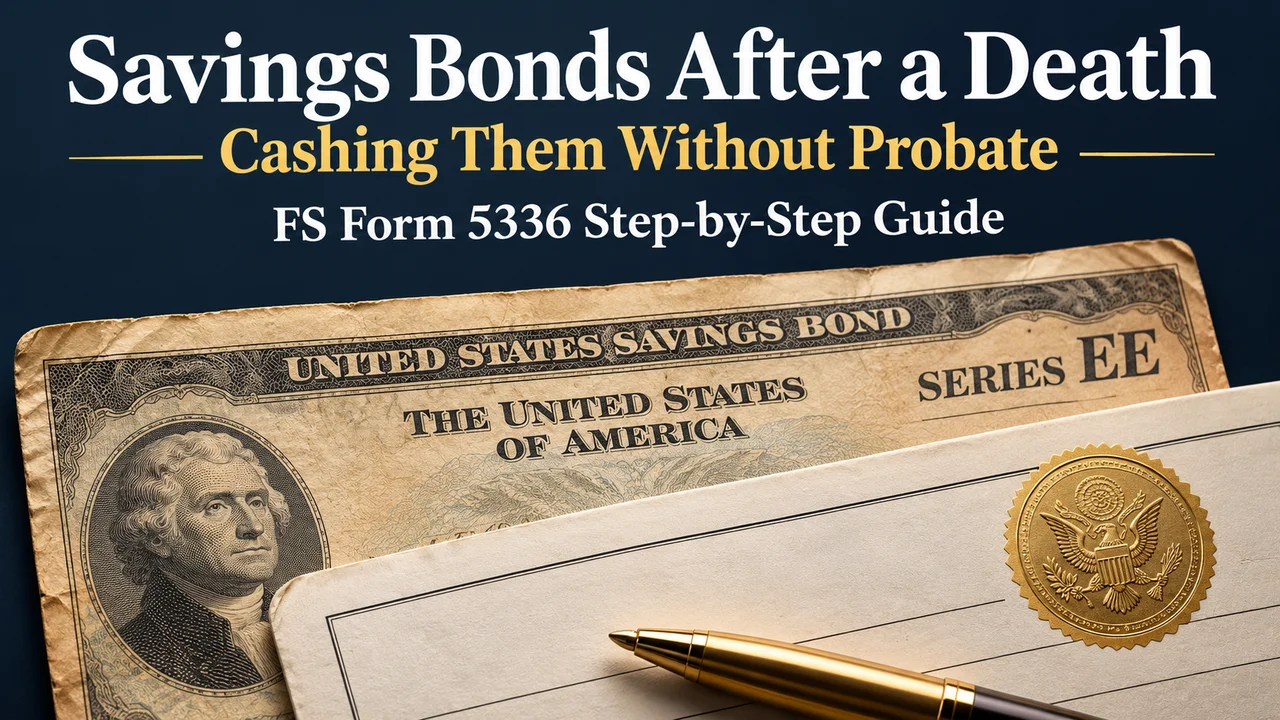
You Found the Bonds. The Bank Said No. Now What?
You are holding paper savings bonds that belong to someone who died. Series EE, Series I, maybe Series E from decades ago — all in one name, the name of the person who is gone. You took them to the bank. The bank said they cannot touch them.
Now you are staring at a Treasury website full of form numbers and regulatory citations, wondering which form applies to you, what "voluntary representative" actually means, and whether one wrong line will add to a wait Treasury currently estimates at five months or longer for paper-bond transactions not in the recipient's name.
The FS Form 5336 Navigation System
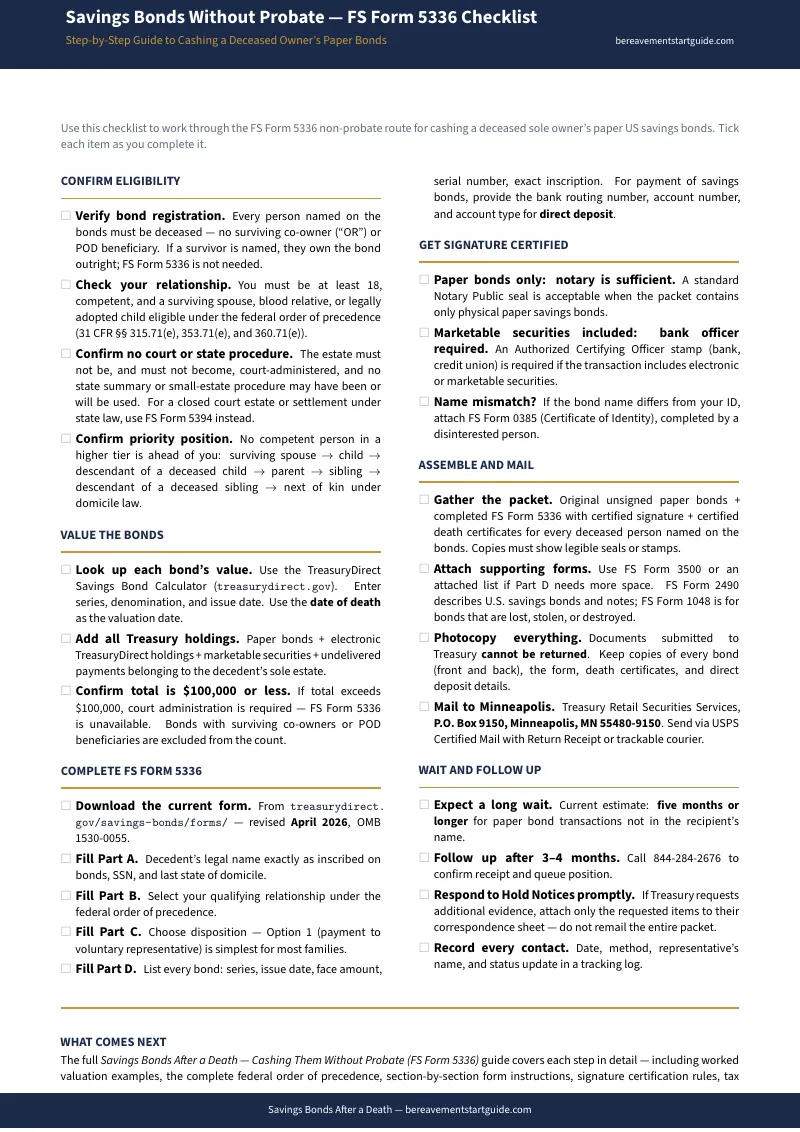
This is the step-by-step guide to cashing a deceased owner's paper savings bonds without probate, without a lawyer, and without guessing your way through the federal forms. It is built around FS Form 5336 — the Treasury's non-administered estate route — and it covers every decision point between finding the bonds and receiving the payment.
What makes it different from the free Treasury instructions: those instructions tell you what to submit. This guide tells you how — section by section, with the mistakes that cause rejection letters, the signature rules that trip people up, and the practical logistics of coordinating a mailing packet when siblings live in different states.
What's Inside
- Non-probate eligibility check — confirm that the bonds, the estate size, and your relationship to the deceased all qualify for the FS Form 5336 route before you spend time on paperwork
- FS Form 5336 walkthrough, section by section — plain-language explanation of every part of the form, with the common fill-in errors that generate deficiency letters from Treasury
- Signature certification protocol — when a standard notary seal works, when you need a bank certifying officer, and what to bring so you do not make two trips
- The mailing packet, assembled — which documents go in, the current address for Treasury Retail Securities Services in Minneapolis, and what not to send (originals that Treasury will not return)
- Processing timeline and follow-up log — realistic expectations for the months ahead, structured tracking for your certified mail, and when to pick up the phone
- Multi-heir distribution — how the voluntary representative system works when siblings or other relatives share the entitlement, and how to document the split
- Edge-case routing — when the co-owner, beneficiary, executor, lost-bond, TreasuryDirect, or tax guide is the right next step instead
Who This Is For
- An adult child who found a parent's paper bonds and needs to cash them without opening probate
- A surviving spouse claiming bonds that were in the deceased's name alone
- A family member coordinating with siblings in different states to get one Treasury packet right the first time
- Anyone who tried the bank, got turned away, and needs the direct-to-Treasury path
Why Not the Free Treasury Instructions?
The official forms and instructions on TreasuryDirect.gov are free. That is where you should go if you want to file on your own, and this guide links to every official form it references.
What the official instructions do not give you: a decision tree that tells you which form applies before you start filling one out. A walkthrough that explains what "signature certification" means in practice — not just the regulation, but which institution to visit, what document to bring, and what to say. A checklist that organizes the physical mailing packet so you do not send something Treasury will not return. A tracking system for the months of waiting that follow.
Probate attorneys charge hundreds of dollars per hour to handle bond paperwork that families can do themselves. Estate settlement software costs hundreds per year for a service you need once. This guide is a one-time purchase that covers the full process — for less than a single hour of attorney time.
What You Get
Your download includes eight files:
- The full guide (52 pages) — 13 chapters covering eligibility, the form, signatures, mailing, timelines, multi-heir distribution, and every edge case that sends you to a different route
- The quick-reference checklist (2 pages) — a condensed pre-mailing audit: who signs, what to attach, where to send, in one printable document
- Bond Inventory Worksheet — record every bond's series, face amount, serial number, and redemption value, then calculate your $100,000 threshold total
- Eligibility Decision Flowchart — five yes/no questions that route you to the correct form before you fill anything out
- FS Form 5336 Field-by-Field Checklist — tick off each entry in Parts A through G and catch the errors that trigger Bureau hold notices
- Submission Packet Index — log every document in the envelope, the bond serial numbers, and the tracking number before sealing
- Treasury Inquiry Log — structured tracker for every phone call, letter, and status update over the months of waiting
- Heir Distribution Record — document each payment to each heir, with confirmation dates, to keep a clear distribution record
All are PDF downloads — no login, no subscription, no recurring fee.
Your Money Back If It Doesn't Help
If this guide does not help you navigate the process, email hello@bereavementstartguide.com for a full refund, no time limit. No forms to fill out, no waiting period, no questions.
Start the Process Today
The bonds are not earning interest forever — some have already matured. Treasury currently lists five months or longer for other paper savings-bond transactions not in the recipient's name. Every week you spend figuring out the forms is another week at the back of the line.
Download the free checklist to see if you qualify, or get the full guide for and start your FS Form 5336 packet today.
Frequently Asked Questions
What if the rules change after I buy?
We update the guide when the rules change. Email us any time, even years later, and we'll send you the current edition free.